
Environmental Impact
We deliver a transformative reduction of carbon emissions for strategic raw materials through an integrated, low‑carbon industrial process.
Our environmental performance is quantified through a Life Cycle Assessment (LCA) based on industrial pre‑FEED data, providing robust and verifiable results across the entire value chain.

Carbon Footprint Performance
Our process delivers a carbon footprint significantly lower than standard and conventional industrial reference processes, measured in kilograms of CO₂ per kilogram of product across the full value chain.
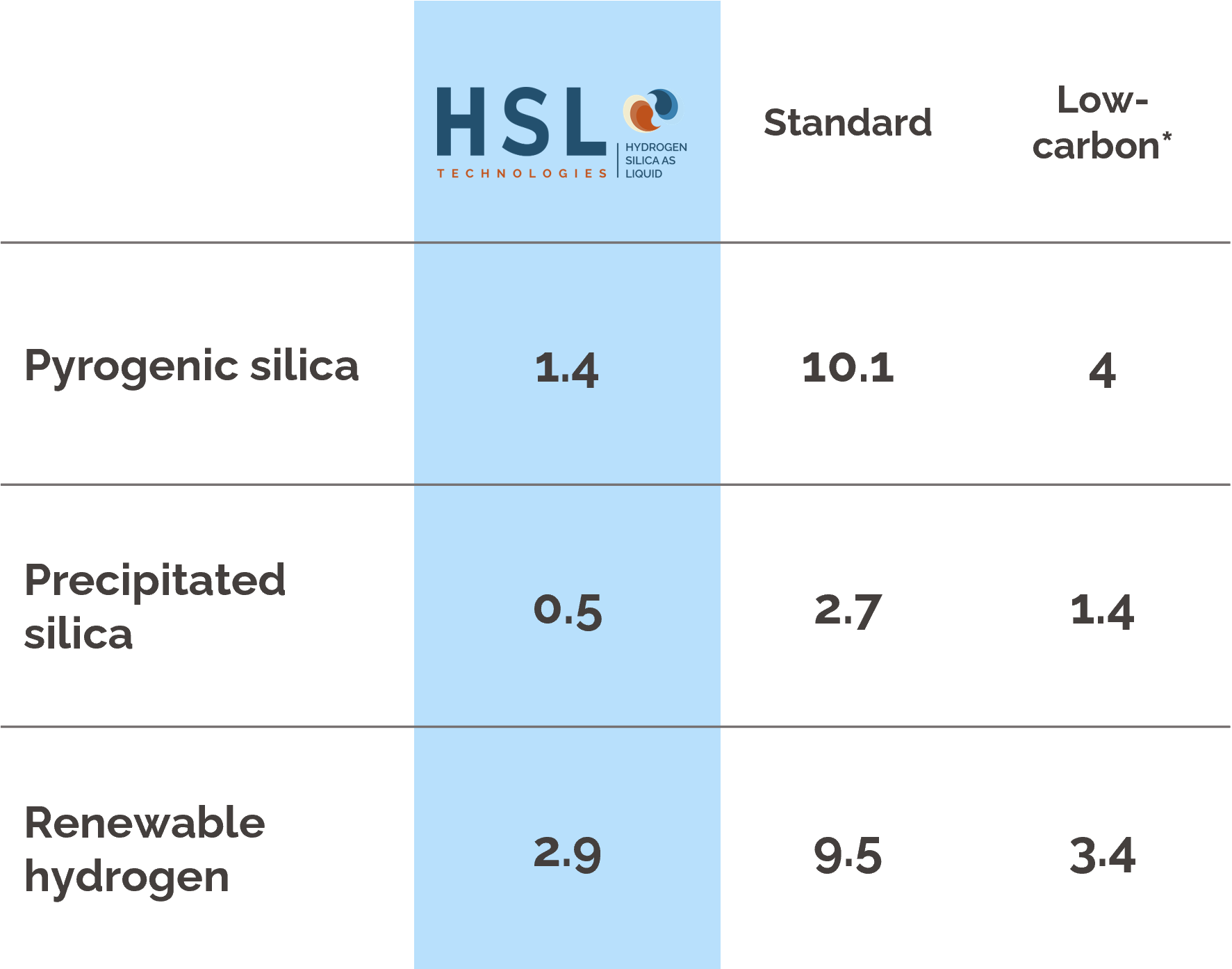
*Low carbon benchmark processes
Key Drivers of Environmental Performance
Sensitivity analyses identify three primary drivers of carbon performance:
Green silicon sourcing
Electricity mix
Recovered steam utilization
Optimized Energy Use Across the Process
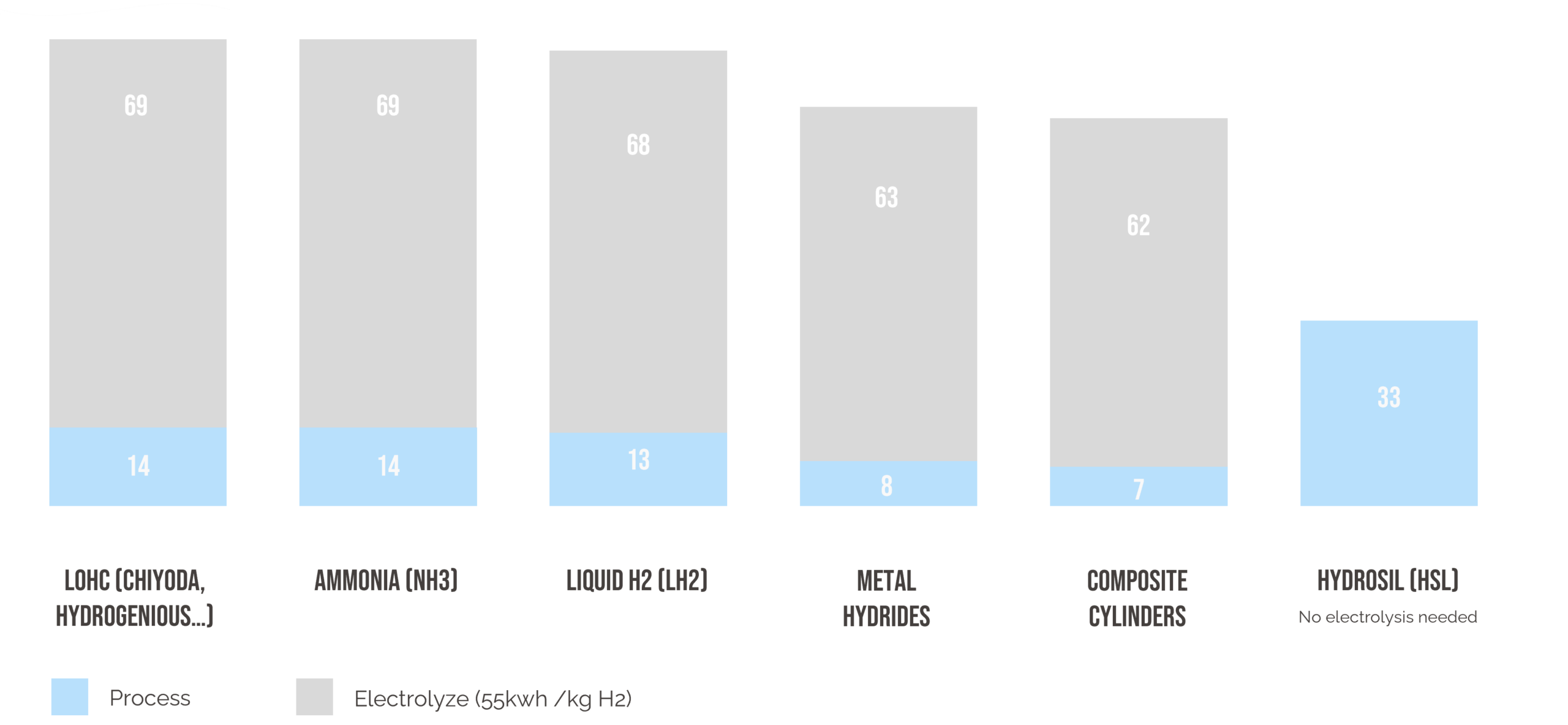
Our environmental performance is rooted in a process designed to minimize energy demand by construction. From production to transport and on‑demand release, HydroSil operates at ambient temperature and pressure, eliminating the need for high‑pressure compression, liquefaction, or cryogenic systems typically required in conventional pathways.
An energy input comparison based on industrial pre‑FEED data shows that HydroSil requires a significantly lower total energy input across the full value chain. In particular, the process avoids the energy‑intensive production steps associated with water electrolysis, which typically require around 55 kWh per kilogram of hydrogen. By integrating material processing and energy generation into a single, optimized solution, HSL reduces cumulative energy consumption, operating complexity, and associated indirect emissions, supporting scalable and durable industrial decarbonization.